
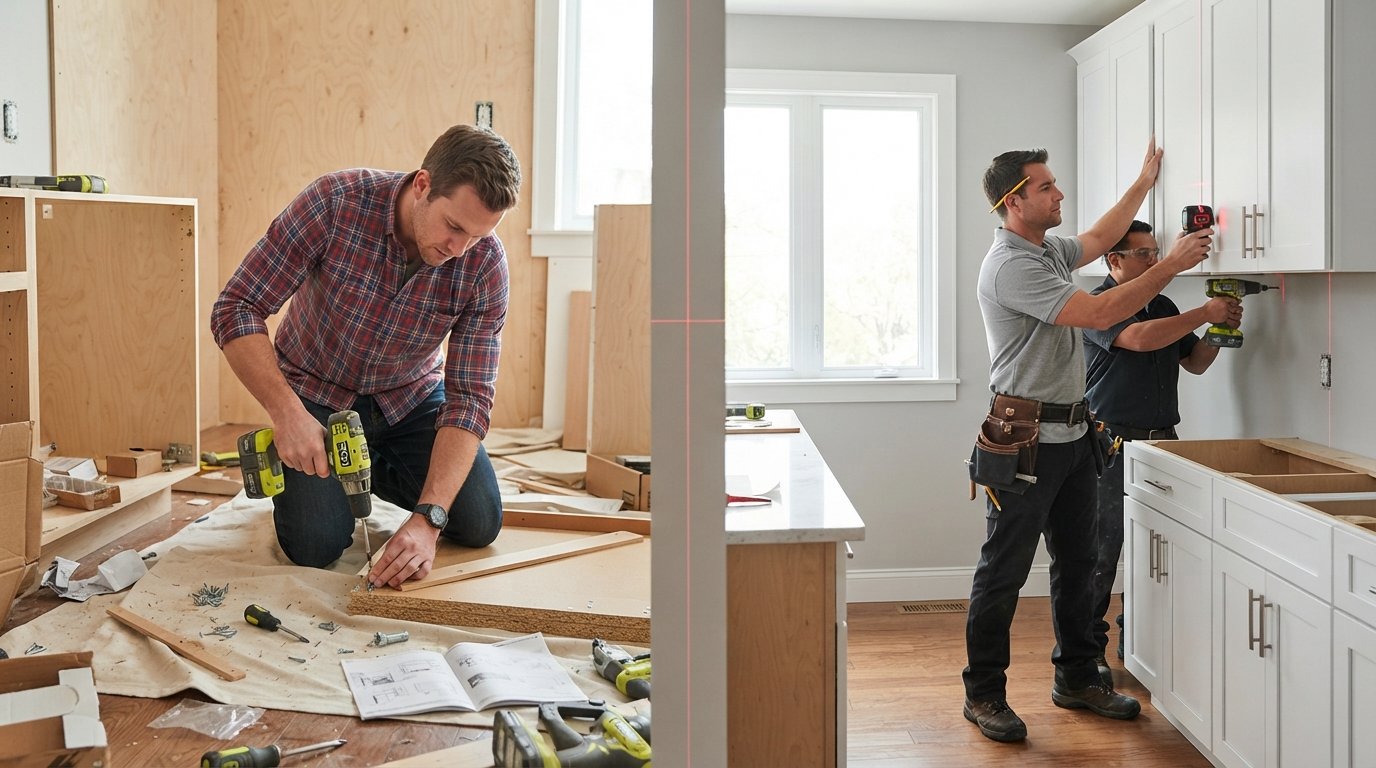
DIY vs Professional Kitchen Cabinet Installation Decision
Discover how to weigh cost, skill, and risk in the DIY vs professional kitchen cabinet installation decision, and find the best path for your home.

By Zoe Harper
Learn more about Cabinet Installation for guides, costs, and what to expect.
Compare Cabinet Installation Pros Near You

Enter your ZIP code to compare top-rated local professionals and request free quotes.
You have measured the walls, pored over hardware samples, and finally committed to new kitchen cabinets. Then comes the question that can make or break your budget and your sanity: should you install them yourself or hire a professional? The DIY vs professional kitchen cabinet installation decision shapes everything from your upfront costs to the long-term quality of one of the most used rooms in your home. Get it right, and you save money or gain peace of mind. Get it wrong, and you can face sagging doors, damaged countertops, or even safety hazards.
This guide breaks down the real trade-offs so you can choose with confidence. We will compare costs, skill requirements, time commitments, and the hidden risks that often tip the scales. By the end, you will know exactly which path fits your budget, your abilities, and your home improvement goals. If you are still mapping out the overall expense, our cabinet installation cost guide covers pricing details that factor into this choice.
The Case for DIY Kitchen Cabinet Installation
For many homeowners, the most obvious appeal of DIY is the potential to save thousands of dollars in labor costs. Professional installation typically runs anywhere from $50 to $150 per hour or a flat rate of $500 to $2,500 depending on the job size and cabinet complexity. If you have a modest kitchen with stock cabinets that arrive fully assembled, a weekend of focused work could indeed keep that money in your pocket.
Beyond the immediate financial savings, DIY offers a sense of ownership and control. You can work at your own pace, make adjustments without waiting for a contractor, and learn valuable skills for future projects. For those who enjoy hands-on work and have some experience with basic tools, cabinet installation can be a satisfying challenge rather than a chore. You also avoid the need to coordinate schedules with a third party, which can sometimes cause delays.
However, the DIY route is not simply about saving money. It demands a realistic assessment of your carpentry skills, physical stamina, and available time. Kitchen cabinets are heavy, bulky, and unforgiving. A single misaligned box can throw off the entire layout. Before you commit, ask yourself whether you can handle the following core tasks with precision:
- Precisely measuring the space and marking stud locations for secure mounting
- Using a level, shims, and a drill to hang upper cabinets that are perfectly plumb and level
- Assembling flat-pack cabinets without damaging panels or hardware
- Cutting and fitting trim, fillers, and toe kicks to match your exact wall dimensions
- Managing heavy lifting and working overhead for extended periods
If you are comfortable with these tasks and have the right tools, DIY can be a viable option. Many big-box stores offer free or low-cost installation classes, and online video tutorials provide step-by-step guidance. Still, the learning curve can be steep. A first-time installer might spend two to three weekends on a job that a professional crew completes in two to three days. That time has a cost too, especially if you are juggling work, family, or other commitments.
The Benefits of Hiring a Professional Installer
When you hire a professional, you are paying for more than just labor. You are buying experience, efficiency, and a warranty on the final result. A seasoned installer has likely hung hundreds of cabinets, encountered every type of wall irregularity, and knows how to handle tricky corners, uneven floors, and out-of-square walls. They bring specialized tools like laser levels, cabinet jacks, and pneumatic nailers that most homeowners do not own.
Professional installation also protects your investment in the cabinets themselves. High-end cabinetry can cost $10,000 or more, and a poor installation can void the manufacturer's warranty or lead to costly repairs. Contractors typically offer their own workmanship warranty, so if something goes wrong within the agreed period, they return to fix it at no extra charge. This peace of mind is especially valuable if you plan to sell your home later, as a professional install adds to the perceived quality and resale value.
Another practical benefit is speed. A professional crew works efficiently because they have done the job many times. They also come prepared with the correct fasteners, shims, and fillers, so you avoid last-minute trips to the hardware store. Moreover, professional installers often coordinate with other trades, such as plumbers or electricians, which is critical if your cabinet installation involves moving sink lines or adding under-cabinet lighting. In these scenarios, the DIY vs professional kitchen cabinet installation decision becomes less about cost and more about risk management.
To get the best outcome, look for installers who are licensed, insured, and willing to provide references. Many homeowners use a platform like HomeRemodelingsContractors to compare local pros, read reviews, and request free estimates. That kind of transparency helps you choose someone who fits your budget and expectations, rather than gambling on a random handyman.
Cost Comparison: DIY vs Professional Over Time
To make a fair cost comparison, you need to look beyond the initial labor bill. DIY may seem cheaper at first, but hidden expenses can quickly add up. Consider these typical line items:
- Tool purchases or rentals: $150 to $600 if you do not already own a drill, level, stud finder, and clamps
- Materials like shims, screws, filler strips, and caulk: $50 to $150
- Mistakes: damaged panels, broken doors, or miscut pieces can cost $100 to $500 to replace
- Your time: if your hourly wage is $30, spending 40 hours on installation represents $1,200 in opportunity cost
When you add those together, a DIY project might only save 20 to 30 percent compared to professional rates, especially once you account for the value of your time. Professional quotes usually include all labor, fasteners, and minor adjustments, so you know your total cost upfront. Some contractors also offer package deals that bundle installation with countertop or backsplash services, which can reduce your overall project cost.
Another financial factor is potential damage to other parts of your kitchen. A professional who accidentally cracks a tile backsplash or scratches a countertop is usually liable for repairs. A DIY mistake means you pay for that out of pocket, and if the damage is structural, it could cost far more than the original installation quote. That risk is hard to quantify but very real, which is why many homeowners choose to hire a pro even when the budget is tight.
Skill and Knowledge Requirements for a Quality Install
Kitchen cabinet installation is not just about screwing boxes into studs. It requires careful planning, precise measurements, and an understanding of how cabinets interact with other elements like countertops, appliances, and lighting. For example, you need to ensure that the upper and lower cabinets align perfectly so that the doors open and close without hitting each other or the countertop edge. You also need to account for the thickness of the countertop material and the toe kick height to maintain comfortable clearance.
Another challenge is working with walls that are not perfectly square. In older homes, it is common for walls to bow or corners to deviate from 90 degrees. A professional knows how to use shims and scribe fillers to hide these imperfections, creating a flush look. A novice might end up with visible gaps or a cabinet that rocks slightly, leading to long-term wear on hinges and doors.
Beyond the physical installation, you must also know local building codes, especially if you are altering plumbing or electrical lines. In some areas, permits are required for any kitchen remodel, and failing to obtain one can result in fines or problems when you sell your home. Professional contractors are familiar with these regulations and will handle the paperwork as part of their service. If you are doing the work yourself, you are responsible for ensuring everything meets code, which adds another layer of research and potential expense.
If you still feel confident in your abilities, consider doing a small practice project first, like installing a single wall cabinet or a bathroom vanity. That will give you a feel for the leveling and anchoring process without the pressure of a full kitchen. But if you find yourself struggling with basic alignment or your tools feel unfamiliar, it is wise to pause and call a professional before you make a costly error.
When DIY Makes Sense (and When It Does Not)
There is no one-size-fits-all answer in the DIY vs professional kitchen cabinet installation decision. The right choice depends on your specific situation, so let us look at some scenarios to guide you.
DIY might be the right call if:
- You have previously installed cabinets or similar millwork and own the necessary tools
- Your kitchen has a simple layout with no awkward corners or unusual wall conditions
- You are working with ready-to-assemble or stock cabinets that come in standard sizes
- You have the time to dedicate a few weekends without rushing
- Your budget is very tight and you are willing to accept some risk for potential savings
Hiring a professional is strongly advised if:
- Your kitchen has uneven walls, high ceilings, or requires custom modifications
- You are installing custom or inset cabinets that demand precision joinery
- You need to move plumbing, electrical, or gas lines as part of the project
- You have physical limitations that make lifting heavy boxes difficult
- You want a warranty and guaranteed workmanship for your investment
If you are still leaning toward DIY after reading this, take a close look at the manufacturer's instructions for your specific cabinet brand. Some companies have strict installation requirements, and any deviation can void the warranty. Also, check whether your home insurance covers damage from a self-installation gone wrong. Usually, it does not, which means you are fully exposed to the financial downside.
How to Get Professional Quotes (and Avoid Surprise Bills)
If you decide to hire a professional, the next step is gathering quotes and vetting candidates. Start by asking friends, family, or a trusted contractor for recommendations. Then, use a platform like BuySellRemodel to request free estimates from multiple local pros. This gives you a sense of the market rate and helps you compare services side by side.
When you receive quotes, make sure they are itemized. A detailed estimate should include the cost of labor, materials, any subcontracted work, and a timeline for completion. Ask about what happens if extra work is discovered, such as finding water damage behind old cabinets. A reputable contractor will provide a clear change-order process so you are not hit with surprise bills later.
Before signing, verify that the installer is licensed and insured. Ask for proof of liability insurance and workers' compensation coverage. This protects you if an accident happens on your property. Also, ask for references and follow up with at least two recent clients. Ask them about the quality of the work, whether the job stayed on schedule, and how the installer handled any problems.
Finally, get everything in writing. The contract should include the scope of work, payment schedule, warranty terms, and a start date. Avoid paying more than 30 percent upfront, and never make the final payment until you have inspected the work and are satisfied with the result. A professional installer will welcome your questions and be happy to explain their process, so you can feel confident that your kitchen is in good hands.
Weighing Time and Convenience in Your Decision
Time is often the most underestimated factor in the DIY vs professional kitchen cabinet installation decision. A professional crew can typically complete a standard 10-cabinet kitchen in two to three days, including removal of old cabinets if needed. That means your kitchen is out of commission for a short period, and you can return to your normal routine quickly.
In contrast, a DIY project can stretch over several weeks, especially if you are working evenings and weekends. During that time, your kitchen may be unusable, forcing you to eat out or set up a temporary kitchen in another room. The inconvenience adds up, both financially and emotionally. If you have a family, a long DIY project can disrupt meals and daily routines, which is something to consider.
Also, think about the physical toll. Lifting full-height upper cabinets overhead is strenuous and can cause back or shoulder injuries if you are not careful. Professionals have the right lifting techniques and equipment, such as cabinet jacks, which make the job safer and more efficient. You might save money by doing it yourself, but if you end up with an injury, the medical bills will quickly erase any savings.
On the other hand, some homeowners genuinely enjoy the DIY process and find it rewarding. They might have a flexible schedule or a passion for woodworking that makes the extra time feel like a hobby rather than a burden. If that describes you, then DIY can be a great way to personalize your kitchen and learn new skills. Just be honest about your experience level and set realistic expectations for how long the project will take.
Making the Final Call
So, how do you decide? Start by writing down your budget, your available time, and your confidence in your handyman skills. Then, consider the complexity of your kitchen layout and the quality of the cabinets you have chosen. If you are still unsure, get a few professional quotes anyway. Knowing the exact cost of hiring someone can make the DIY option look more or less attractive by comparison.
Remember that this is not a permanent decision. You could also take a hybrid approach: install the easier lower cabinets yourself and hire a professional for the upper cabinets, which are more challenging to align. Or, you can handle the demolition and prep work yourself, then bring in a pro for the final installation. This way, you save some money while still ensuring the most critical part of the job is done right.
Whatever you choose, prioritize safety and quality. A kitchen is a high-use area, and poorly installed cabinets can lead to frustration for years to come. If you decide to hire a professional, use a service that connects you with vetted local contractors, like BuySellRemodel, to simplify the process. Request free estimates, check references, and read reviews so you can make an informed choice.
In the end, the DIY vs professional kitchen cabinet installation decision boils down to a balance of cost, risk, and personal preference. By weighing the factors outlined here, you can select the path that fits your skills and budget, ensuring your new kitchen is both beautiful and functional for many years to come.